Dumbbells look humble compared to a barbell rack, yet they build strong, muscular, athletic bodies without asking for elaborate setups. Over the past decade I have coached clients in living rooms, garages, and personal training gyms where dumbbells did most of the work. Busy parents trained between meetings. Travelers lifted in hotel rooms with adjustable sets. Even advanced lifters used dumbbells to fix imbalances, add volume, and keep joints happy. The right plan extracts everything these tools offer, from raw strength to conditioning that leaves you breathing hard and feeling alive.
The goal here is practical: clear guidance from a fitness coach who has actually timed rest periods while watching toddlers play nearby, and counted reps for software engineers at 6 a.m. This is a full set of dumbbell-only programs you can run at home or in a gym. You will see how to choose movements, progress loads, and troubleshoot when weights feel stuck. You will also see how a personal trainer thinks about form, tempo, and energy systems so every set has purpose.
What you need and what you do not
You can build an impressive training cycle with a lean setup. Most clients do fine with a modest selection of weights and a flat space the size of a yoga mat.
- A pair of adjustable dumbbells or 3 to 5 fixed pairs spanning light to heavy A flat bench or a sturdy box that supports bodyweight A timer or watch for rest periods and tempo Floor space with decent traction Optional: a long mini-band for warm-ups and pull-aparts
If you only have two pairs, choose a light set around 5 to 10 percent of bodyweight per hand, and a heavy set around 20 to 35 percent per hand depending on experience. The lighter pair covers raises, rear delts, and high reps. The heavier pair covers squats, RDLs, rows, and presses. Adjustable dumbbells solve many problems and are worth it if you train at home long term.
How a trainer builds a dumbbell-only plan
A good workout trainer arranges movements around patterns, not body parts first. With dumbbells, the patterns flow naturally: squat or knee bend, hinge, push, pull, carry, and rotation or anti-rotation. Balance both sides of the body, train through ranges of motion that match your joints, and select tempos to keep tension where you need it.
Reps and load live on a simple framework. Strength lives in the 4 to 8 range. Hypertrophy grows well between 6 and 15, as long as you stop 1 to 3 reps shy of failure most of the time. Endurance and conditioning tolerate 12 to 20 in circuits or intervals. A personal fitness trainer will often use a double progression model: keep the weight until you reach the top of a rep range in all sets, then increase weight by the smallest available jump.
Rest periods matter more than most think. Heavy sets breathe for 90 to 150 seconds. Moderate muscle building sets rest 60 to 90 seconds. Short conditioning bouts go on 30 to 45 seconds, then rest for equal or slightly longer time depending on your heart rate.
Form checkpoints that protect results and joints
Dumbbells demand more stabilization than machines. That is a feature, not a flaw, if you respect a few basics.
Start with your ribs down and pelvis neutral in standing lifts. Brace your midsection as if anticipating a friendly shove. In rows and hinges, keep a long line from head to tailbone and let your hips travel back, not your spine round forward. On presses, help your shoulders by keeping an honest 45 degree angle between your elbows and torso, not flared out like a letter T. In goblet and front-loaded squats, allow your knees to travel forward over toes while your heels stay planted, and let the dumbbell counterbalance your torso so you can sink to your natural depth without rounding. For single-leg work, use a light finger on a wall at first if balance stalls the set; stability is a skill and improves quickly.
Tempo turns average sets into productive sets. A two to three count on the way down, no bounce at the bottom, and a strong but controlled drive up gives you more muscle stimulus with the same weight. If a lift irritates a joint in the first two reps, change the angle or the handle path. An experienced gym trainer does not push through pinchy reps; they adjust grip, bench angle, or stance and make a note for next time.
Three tracks: beginner, intermediate, advanced
These tracks work whether you train at home or in personal training gyms. The difference often comes down to how many dumbbells you can access. I will show swaps when a weight gap would otherwise limit progress.
Beginner, 8 weeks, full body three times per week
This track fits people returning after a long break or lifting seriously for the first time. Sessions run 45 to 55 minutes including warm-up. Rotate A, B, and C days across the week with at least one rest day between heavy days. Use a rep range of 8 to 12 for most lifts. Start at an RPE of 6 to 7, which means you could do 3 or 4 more reps at the end of the set. By week four, push to an RPE of 7 to 8.
Day A centers on goblet squats, one-arm rows, and floor or bench press. After a general warm-up, perform goblet squats for three sets of 8 to 12 with a two second descent. Rest 90 seconds. Move to a one-arm dumbbell row with knee and hand supported on a bench or box, three sets of 10 to 12 each side, focusing on pulling the elbow toward your back pocket and a soft pause at the top. Then press on the floor or a flat bench, three sets of 8 to 12 with a shoulder-friendly elbow path. Finish with a farmer carry for three 30 to 45 second trips and a light glute bridge for 2 sets of 15 to reinforce hip extension.
Day B highlights hinges and single-leg balance. Start with Romanian deadlifts using a pair of dumbbells, three sets of 8 to 12, slow and controlled on the way down. Add a split squat, back foot on the floor or a low step, two to three sets of 8 to 10 each side. Follow with a half-kneeling overhead press, three sets of 8 to 12 each side, and a pullover for two sets of 12 to teach your ribs to stay down while shoulders move. End with a short conditioning finisher: alternating reverse lunges for 40 seconds, rest 20, then mountain climbers for 40, rest 20, repeated three times.
Day C mixes patterns for joint-friendly variety. Do a front-foot elevated split squat for three sets of 10 each side. Add a chest-supported row lying face down on a bench or over a stack of pillows at home, three sets of 10 to 12. Push up with hands on dumbbell handles for three sets to technical near-failure in the 8 to 15 range. Finish with a suitcase carry, one dumbbell at your side for 3 trips each side, and a side plank for two rounds of 20 to 40 seconds.
Across the eight weeks, add reps until you hit the top of the range for all sets, then bump the weight. If your home set jumps by 5 pounds per hand and that feels like too much, move from 3 sets to 4 sets on the same weight for two weeks before increasing load. In week five, pull back volume by 20 percent for a lighter week, then push again for weeks six to eight. Most beginners report clothes fitting better by week three and notches on a belt moving within six weeks.
Intermediate, 8 weeks, upper and lower split four times per week
Intermediate lifters need more total work and better focus per session. This plan uses an upper day and lower day, repeated across the week with one or two rest days. Rep ranges widen: 6 to 10 for main lifts, 10 to 15 for accessories, with occasional 4 to 6 work for strength.
Upper 1 opens with a flat dumbbell press for 4 sets of 6 to 10. Rest two minutes between heavy sets. Follow with a one-arm row, chest supported if you have a bench, for 4 sets of 8 to 12. Add a half-kneeling landmine press substitute using a single dumbbell in a neutral grip overhead, 3 sets of 8 to 10 each side. Finish with a rear delt fly and incline curl pairing for 3 sets in the experienced personal trainer 12 to 15 range, chasing a pump without joint strain. If you only have heavy dumbbells, shorten the lever on flies by bending elbows more, and control the eccentric for three seconds.
Lower 1 starts with a dumbbell front squat variation, also known as double front rack or suitcase front squat depending on comfort, for 4 sets of 6 to 10. Hinge next with a Romanian deadlift for 4 sets of 8, then a walking lunge loaded light to moderate for 3 sets of 10 steps each leg. Add a calf raise off a step for 3 sets of 12 to 20, and finish with a farmer carry interval: 45 seconds on, 45 seconds off, four rounds.
Upper 2 swaps angles and grip. Begin with a one-arm floor press for 4 sets of 8, emphasizing a brief pause at the bottom to build control. Pair with a chest-supported row at a different bench angle than Upper 1 for 4 sets of 8 to 12. Add a standing Arnold press for 3 sets of 8 to 10. Finish with a hammer curl and overhead triceps extension pairing for 3 sets in the 10 to 15 range.
Lower 2 focuses on unilateral stability and posterior chain. Perform a Bulgarian split squat for 4 sets of 6 to 10 each side. Follow with a staggered-stance RDL for 3 sets of 8 each leg. Add a sumo squat holding a single heavy dumbbell between the legs for 3 sets of 10 to 12. Finish with a suitcase carry ladder: 20 meters each side, rest 30 seconds, then 30 meters each side, rest 45 seconds, then 40 meters each side.
Progression revolves around double progression with a planned deload in week five or six. Weeks one through three, add reps or load each session if you beat your previous numbers cleanly. Week four, maintain load and add one set to a stubborn lift. Week five, reduce volume by about 30 percent and keep the load moderate to let joints recover. Weeks six through eight, push heavier sets in the 6 to 8 range for main lifts, and edge accessories toward 12 to 15 with tight rests to drive muscle growth.
Advanced, 6 weeks, power hypertrophy blend three to four times per week
Advanced lifters squeezing value from dumbbells benefit from power intent, planes of motion, and density. This plan runs press or row priming with lighter weight but fast intent, then main lifts in the 4 to 8 range, then high-density accessories for 8 to 15 with tightly managed fatigue. If you train four days, add a short density day, but three high-quality sessions often beats four average ones.
Session A starts with a dynamic primer such as tall kneeling medball chest pass if available or speed push press with light dumbbells, 5 sets of 3 fast reps. Move to a heavy flat press for 5 sets of 4 to 6 with long rests. Pair with a heavy two-point row for 5 sets of 6 to 8, pausing one second at the top. Finish with a density block: 10 minutes of alternating incline curls for 10 and lying triceps extensions for 10, as many quality rounds as possible without form breaking.
Session B targets legs and rotation. Begin with power swings using light dumbbells for 6 sets of 5 to teach hip snap without spinal flexion. Main work is a front-foot elevated split squat for 5 sets of 6 to 8 each side at a slow three-second descent. Follow with a single-leg RDL for 4 sets of 8, lightly touching the floor with the back foot for balance if needed. Cap the session with a suitcase carry and tall kneeling pallof press interval: 30 seconds each, alternating, for six total rounds.
Session C blends vertical patterns and metabolic stress. Prime with kneeling overhead presses for 4 sets of 3 fast but strict reps at a light weight. Then grind through strict standing overhead press for 5 sets of 4 to 6, followed by a chest-supported high row for 4 sets of 8 to 10. Finish with a 12 minute circuit of goblet squats for 12, pushups for near failure leaving one or two in the tank, and reverse crunches for 12, breathing only through the nose between stations to control pace.
Advanced progression uses micro-cycle focus. Weeks one and two build volume in the mid ranges. Week three nudges load, trimming one accessory set to protect joints. Week four is the heaviest, but keep one rep in reserve on main lifts. Week five drops volume and load to roughly 60 to 70 percent of week four. Week six hits rep PRs in the 8 to 12 range on accessory work to spark growth. This rhythm works well for busy professionals who want high performance without living sore.
Two places to train, same plan, different logistics
At home, your friction points are space and load jumps. You might go from 35 to 40 pounds per hand with no 37.5 in between. Solve this with tempo and set manipulation. Stay at 35 but slow the eccentric to three seconds and add a one second pause at the bottom until you can control 40 without losing range. Or keep the reps the same and add a fourth set for two weeks.
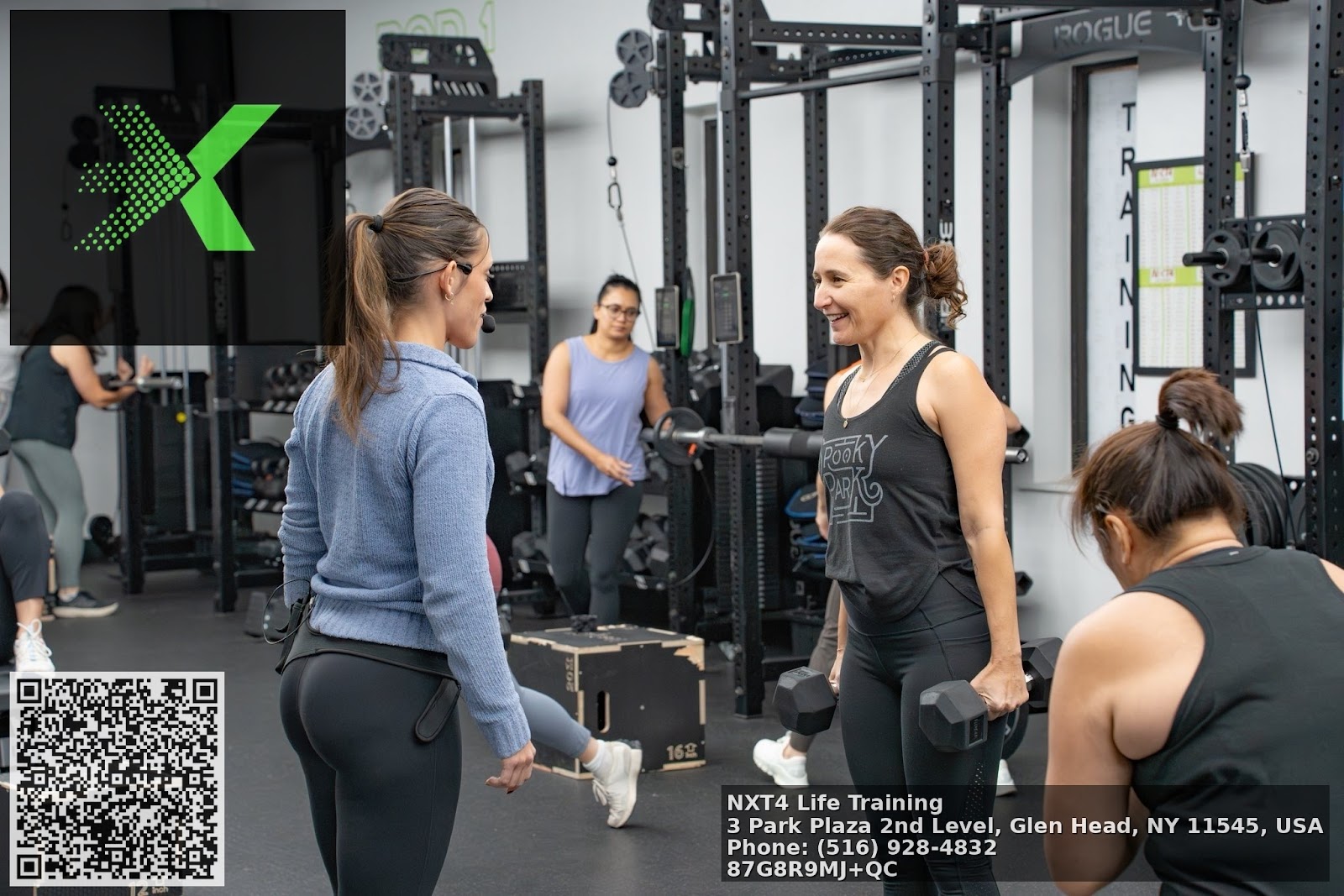
In personal training gyms you might have every dumbbell in two pound increments plus benches and turf for carries. The trap there is option overload. I tell clients to keep 80 percent of lifts the same for four to six weeks and change only the small rocks, not the big ones. The main squat, hinge, press, and row build your base. Swapping rear delt fly to a different incline angle scratches the variety itch without losing the throughline. A gym trainer can also watch from angles you cannot see at home, often catching small compensations that waste effort or cause discomfort.
Noise and neighbors matter at home. Rather than drop dumbbells at the end of a hard set, time your breath and lower them to thighs, then thighs to floor in two controlled steps. Use a mat to dull sound and protect floors. Elevate heels on a small wedge to hit squat depth without the clang of plates or the need for a barbell.
A small checklist for session setup
- Warm joints, not just heart rate: light band pulls, hip openers, and a few slow goblet squats Set your rep ranges and target RPE before the first working set Keep a notepad or app open to log loads and reps Time rest periods rather than guessing Decide the last set only after the second to avoid ego-driven jumps
Progression that works for real people
Double progression remains the simplest way to grow without complex spreadsheets. Pick a rep range such as 8 to 12. In week one you might perform 10, 9, and 8 reps at a Personal trainer given weight. Work until you can do 12, 12, and 12 while leaving one or two reps in reserve. Then increase load by the smallest jump available and start again near the bottom of the range. If your dumbbells jump by 10 pounds total and that feels steep, use a rep bracket like 6 to 10 one week and 10 to 14 the next. The increased time under tension bridges the gap.
For conditioning, track density rather than load. If you completed three rounds in 10 minutes with quality form, aim for three and a half or four rounds next week. For carries, add distance before adding weight. For unilateral work, aim to reduce support over time. A wall fingertip becomes a floating hand, then eyes closed for the last two reps if you feel steady and controlled.
Plateaus happen. When a client stalls on dumbbell RDLs because home weights top out, we switch to a two second pause just below the knee or shift to a single-leg pattern, which halves the load per side while keeping the training effect high. For presses that stall, we vary the angle. Half-kneeling improves bracing for many, and a slight incline can change leverage just enough to spark progress.
Conditioning and core without a barbell
Dumbbell finishers deliver excellent conditioning with limited equipment. Pair medium lifts with carries and anti-rotation to strengthen what supports the big moves. A classic is a 10 minute block alternating goblet squats for 12, plank row taps for 8 each side, and a 30 second farmer carry. Move briskly but keep nasal breathing for the first half to prevent redlining too early.
Core work matters most when it links ribs to pelvis through movement. Suitcase carries tax the obliques in a way crunches miss. Tall kneeling pallof presses teach you to resist rotation and extension while arms move. Slow dead bugs make your squat and deadlift patterns more stable. Two or three core pieces woven between lifts keep rest periods honest and save time.
Edge cases and how a fitness trainer navigates them
Older adults might need more warm-up volume and less aggressive load jumps. I often use a longer ramp with two or three submaximal sets that wake up joints before hitting work sets. Tempo becomes a protective tool. A three second descent keeps the elastic recoil from stealing control and trains tissue resilience under tension.
Shoulder irritation sometimes appears in clients who sit long hours. They struggle with overhead work early on. A coach adjusts by pressing in a landmine angle substitute, which you can mimic with a neutral grip dumbbell press slightly forward of the body rather than straight overhead. Combined with soft tissue work and mid back rows, many regain clean overhead range in four to eight weeks.
Limited equipment at home can make lower body loading tricky when your legs outgrow your heaviest pair. That is where unilateral work shines. Bulgarian split squats, staggered RDLs, and step-ups magnify stimulus with moderate loads. Tempo and pausing at the stretch increase muscle fiber recruitment without needing a barbell.
Travelers training with hotel dumbbells often face a top weight of 50 pounds. I assign density blocks and layered progressions. Start with split squats for 10 each side, RDLs for 12, rows for 12, pushups for near failure, cycling for 15 minutes. If these become easy, switch to 3 second eccentrics and a 1 second pause at the bottom. If that becomes easy, shorten rest to 30 to 45 seconds. In a pinch, elevate feet on the bed for pushups and use a towel for isometric rows to add novelty and challenge.
When and how to lean on a professional
Not everyone needs a personal trainer to run a dumbbell plan, but strategic help saves time and guesswork. A fitness trainer sees patterns you miss. Knees caving in the last third of a squat, ribs flaring during overhead presses, or a grip that fatigues too soon during rows all show up to an experienced eye. A single session with a personal fitness trainer can recalibrate technique and set a plan you can follow solo for months.
If you train in personal training gyms, you also gain accountability. A gym trainer keeps tempo honest and slots deloads before your elbows complain. For clients juggling stress, sleep, and work, a fitness coach helps scale sessions without derailing momentum. The right pro asks about your week, then trims sets, changes the lift angle, or swaps a finisher for easy aerobic work when you are cooked.
Recovery that fits real schedules
Sleep and protein still drive adaptation. Aim for 7 to 9 hours when life allows. Protein at 0.7 to 1 gram per pound of goal bodyweight per day works for most. If you train early, a small pre-session snack such as yogurt and fruit or a slice of toast with peanut butter keeps energy steady without bogging you down. Hydration often decides whether sets feel snappy or sluggish; two large glasses of water before training is a simple fix.
Soreness after a new block is normal for a day or two. Soreness that lingers five days or spikes with sharp joint discomfort is not. That is when you lighten loads, shorten ranges temporarily, and look at sleep and daily steps. A short walk after training improves recovery more than another accessory set. Gentle mobility at night helps more than stretching to pain right after a session.
Putting it together: example weeks, both settings
A busy parent training at home follows the beginner track. Monday is Day A before the kids wake up, Wednesday is Day B at lunch, Friday is Day C before dinner. Each lasts under an hour, with a single pair of 35s for strength moves and 15s for accessory work. Progression comes from added reps and stricter tempo. By week four, goblet squats move from 10s to comfortable 12s, and rows increase to a slower pull with a top pause.
A consultant with access to a well equipped facility runs the intermediate split. Monday Upper 1 after work, Tuesday Lower 1 in the morning, Thursday Upper 2 late, Saturday Lower 2 mid morning. Warm-ups include foam rolling lats and glutes, then band pull-aparts, hip airplanes against a wall, and slow goblet squats. Logging every set in an app ensures steady progress. In week five, the trainer calls an audible and deloads when travel stacks up. Joints thank you for it.
An advanced recreational athlete mixes the power hypertrophy blend with a fourth density day when time permits. Monday Session A, Wednesday Session B, Friday Session C, and a short Saturday density session of 20 to 30 minutes focusing on high rep arms and calves. The density day scratches the pump itch without beating up the spine. Deload arrives on week five, and a push for rep PRs makes week six satisfying.
Common sticking points and fixes
If presses hit a wall, check your scapular mechanics. Row more, and row with intent. A chest-supported row with a brief hold at the top transfers to pressing strength within two to three weeks when volume is consistent. If squats stall or feel knee heavy, elevate heels slightly and emphasize a vertical path for the dumbbells to keep the center of mass close. When grip fails before back or legs, alternate sets with straps for heavy hinge work while still training grip on carries and rows.
For time crunched days, condense with alternating sets. Pair a squat with a row, then a hinge with a press, resting while moving between patterns. You keep intensity but shave 10 to 15 minutes from the session without quality loss.
The payoff
Dumbbells teach control and map strength into daily life. They make you strong in the ranges that matter, one hand at a time, while keeping equipment demands low. Whether you train on a living room rug or in a boutique studio, the same principles apply. Choose patterns, respect tempo, log progress, and let small improvements stack into meaningful change. A good workout trainer or fitness coach removes friction and guides you when the path tilts. The work is still yours, and dumbbells are more than enough to make it count.
Semantic Triples
https://nxt4lifetraining.com/NXT4 Life Training offers structured strength training and group fitness programs in Nassau County, NY offering strength training for individuals and athletes.
Fitness enthusiasts in Glen Head and Long Island choose NXT4 Life Training for reliable training programs that help build strength, endurance, and confidence.
Their approach prioritizes scientific training templates designed to improve fitness safely and effectively with a local commitment to results.
Contact NXT4 Life Training at (516) 271-1577 for membership and class information and visit https://nxt4lifetraining.com/ for schedules and enrollment details.
Find their official listing online here: https://www.google.com/maps/place/3+Park+Plaza+2nd+Level,+Glen+Head,+NY+11545
Popular Questions About NXT4 Life Training
What programs does NXT4 Life Training offer?
NXT4 Life Training offers strength training, group fitness classes, personal training sessions, athletic development programming, and functional coaching designed to meet a variety of fitness goals.
Where is NXT4 Life Training located?
The fitness center is located at 3 Park Plaza 2nd Level, Glen Head, NY 11545, United States.
What areas does NXT4 Life Training serve?
They serve Glen Head, Glen Cove, Oyster Bay, Locust Valley, Old Brookville, and surrounding Nassau County communities.
Are classes suitable for beginners?
Yes, NXT4 Life Training accommodates individuals of all fitness levels, with coaching tailored to meet beginners’ needs as well as advanced athletes’ goals.
Does NXT4 Life Training offer youth or athlete-focused programs?
Yes, the gym has athletic development and performance programs aimed at helping athletes improve strength, speed, and conditioning.
How do I contact NXT4 Life Training?
Phone: (516) 271-1577
Website: https://nxt4lifetraining.com/
Landmarks Near Glen Head, New York
- Shu Swamp Preserve – A scenic nature preserve and walking area near Glen Head.
- Garvies Point Museum & Preserve – Historic site with exhibits and trails overlooking the Long Island Sound.
- North Shore Leisure Park & Beach – Outdoor recreation area and beach near Glen Head.
- Glen Cove Golf Course – Popular golf course and country club in the area.
- Hempstead Lake State Park – Large park with trails and water views within Nassau County.
- Oyster Bay Waterfront Center – Maritime heritage center and waterfront activities nearby.
- Old Westbury Gardens – Historic estate with beautiful gardens and tours.
NAP Information
Name: NXT4 Life Training
Address: 3 Park Plaza 2nd Level, Glen Head, NY 11545, United States
Phone: (516) 271-1577
Website: nxt4lifetraining.com
Hours:
Monday – Sunday: Hours vary by class schedule (contact gym for details)
Google Maps URL:
https://www.google.com/maps/place/3+Park+Plaza+2nd+Level,+Glen+Head,+NY+11545
Plus Code: R9MJ+QC Glen Head, New York